





"Transform Your Church with Simple Systems and Cutting-Edge Technology"
Join the Church Systems Bootcamp - Empower Your Ministry, Impact Your Community!



Why Simple Systems Consulting?
Welcome to Simple Systems Consulting - Your Trusted Partner in Church Growth! At Simple Systems, we are dedicated to helping pastors achieve genuine and sustainable church growth. Our founder, Henry Tolbert, has collaborated with over 100 churches to build powerful systems that maximize impact without compromising on gimmicks.
After years of serving as a church leader in many different roles, I felt an overwhelming call to find a role that allowed me to serve pastors and church leaders everywhere. more specifically, I wanted to help churches see the value of spiritual growth through discipleship.
Over and over again, I would see churches pursue numerical and financial growth, without realizing that if people grew spiritually they could more easily help the church numerically and financially.
After just one year, our team has been able to see more than 2500 people start a discipleship journey through their local church. That's who we are. We're disciple-makers who want to help you and your team become better disciple-makers.



Introducing the Church Systems Bootcamp - Your Gateway to Effective Ministry
This comprehensive program equips pastors with time-tested systems for worship planning, assimilation, evangelism, giver development and more. With our bootcamp, you can grow your church authentically and achieve lasting impact!
Develop A Stronger Team To Carry More Responsibility
Turn Visitors Into Members More Consistently
Onboard New Members And Get Them Active Fast
Maximize Your Time So You Can Focus On What's Next
Protect The Church By Building Systems That Stay When People Leave
Save Money And Increase Revenue By Developing Generous Givers In The Church
WE HAVE WORKED WITH 100+ CHURCHES AND COUNTING:



Real Stories of Church Transformation
Hear Inspiring Stories of Church Transformation! Our bootcamp has empowered countless pastors to witness remarkable growth while staying true to their calling. Discover how church systems have revolutionized ministries and brought genuine impact to communities.
Copyright 2023 . All rights reserved
YOU WANT TO MAKE MORE DISCIPLES.
WE MAKE IT SIMPLE..

Small Call to Action Headline
Your Paragraph text goes Lorem ipsum dolor sit amet, consectetur adipisicing elit. Autem dolore, alias, numquam enim ab voluptate id quam harum ducimus cupiditate similique quisquam et deserunt, recusandae. here

Small Call to Action Headline
Your Paragraph text goes Lorem ipsum dolor sit amet, consectetur adipisicing elit. Autem dolore, alias, numquam enim ab voluptate id quam harum ducimus cupiditate similique quisquam et deserunt, recusandae. here
Small Call to Action Headline
Your Paragraph text goes Lorem ipsum dolor sit amet, consectetur adipisicing elit. Autem dolore, alias, numquam enim ab voluptate id quam harum ducimus cupiditate similique quisquam et deserunt, recusandae. here
YOU WANT TO MAKE MORE DISCIPLES.
WE HAVE THE SYSTEMS TO HELP YOU DO IT!
1. REACH & KEEP NEW PEOPLE
Begin with a strong focus to GATHER new people and get them engaged with the church.
2. BUILD & FIELD YOUR TEAMS
Shift focus to GROW the people you have with systems to build connection and commitment.
3. CATCH & RELEASE NEW LEADERS
Expand the vision to create space for new leaders to emerge and take the ministry to new spaces and new people for the Kingdom.
THE RESULTS SPEAK FOR THEMSELVES!
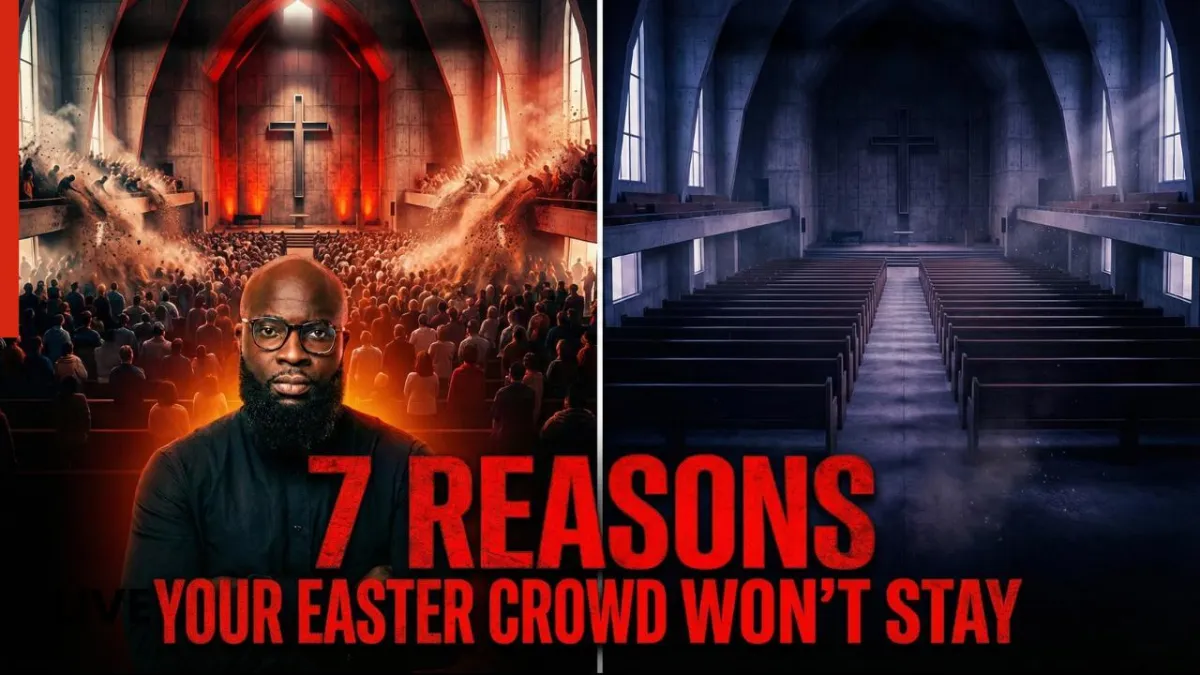
Turn Easter Visitors into Lasting Members: From One-Day Crowd to Year-Round Growth
Turn Easter Visitors into Lasting Members: From One-Day Crowd to Year-Round Growth
Easter is not the problem.
The problem is what happens the week after.
Every year, churches across the country see the same pattern:
Packed rooms. Overflow parking. Full kids’ spaces.
Then the next Sunday?
Silence.
It’s not because people didn’t enjoy it.
It’s not because the message wasn’t good.
It’s because most churches treat Easter like an event - instead of a system.
If you want sustained growth, you don’t need a bigger production.
You need a better plan.
Easter Is a Harvest - Not a Concert
Easter is one of the only times of year when people who normally wouldn’t attend church are open to showing up.
It’s a harvest moment.
But here’s the tension:
God may draw them in.
But it’s your responsibility to catch and care for them.
If Easter is treated like a one-day concert, people will attend, enjoy it, and move on.
But if Easter is treated like the beginning of a journey, everything changes.
Momentum is built after the service.
Easter Doesn’t Create Weakness - It Reveals It
Easter exposes whatever your systems already look like.
If your parking is chaotic, it will show.
If your follow-up is unclear, it will show.
If your team is disorganized, it will show.
Harvest without nets leads to loss.
And the “nets” are a structure.
They are systems.
They are trained teams.
They are clear next steps.
Without those, effort gets wasted.
Seven Reasons Your Easter Visitors Don’t Come Back
Let’s be honest about what’s really happening.
1. You Started Too Late
If you begin planning Easter in March, you’re already behind.
Strong churches plan 8–12 weeks out - sometimes a year ahead.
Graphics. Sermon flow. Volunteer recruitment. Follow-up systems. Capacity planning.
Rushing produces stress.
Planning produces growth.
2. You Promoted Before You Prepared
Before you invite the crowd, ask:
Are the bathrooms clean?
Is the children’s check-in smooth?
Is the parking clear?
Is guest flow intentional?
Guests don’t return to confusion.
They return to clarity.
3. Your Team Wasn’t Aligned
When roles are unclear, the leader becomes the bottleneck.
Easter requires:
Defined roles
Area leaders
Clear communication
Checklists
Unity builds confidence.
Disorganization builds fatigue.
4. You Chased Spectacle Instead of Sustainability
It’s easy to build a “wow” service.
But can you repeat it?
If Easter becomes an unsustainable production spike, people will come for the experience - not the discipleship.
The goal isn’t to impress.
The goal is to build pathways.
5. You Didn’t Have Capacity
Growth requires people.
If children’s ministry is overwhelmed…
If guest services are understaffed…
If follow-up isn’t assigned…
Visitors slip through cracks.
You cannot receive what you are not built to sustain.
6. Your Planning Culture Is Reactive
Last-minute planning kills momentum.
Advertising needs time.
Teams need clarity.
Volunteers need training.
Discipline grows churches.
Chaos drains them.
7. You Didn’t Follow Up Intentionally
This is the biggest one.
Collecting a connection card is not a follow-up.
Follow-up means:
24-hour thank you
7-day personal contact
30-day next-step invitation
Momentum is built in the 30 days after Easter - not during the service.
Practical Plan: Turn Easter into a Growth Season
Here’s the shift:
Stop planning Easter as a service.
Start planning Easter as a 30–90 day growth window.
What That Requires:
Start planning 8–12 weeks early
Assign roles and empower leaders
Prepare the guest experience end-to-end
Map a clear “next steps” pathway
Train teams intentionally
Build a 30-day follow-up sequence
Focus on discipleship, not attendance
Easter is not the finish line.
It’s the starting line.
Now Let’s Talk About What This Really Means
If you read this and thought:
“We don’t have those systems.”
You’re not behind.
You’re just ready.
Because here’s the truth:
Most churches don’t need more inspiration.
They need infrastructure.
That’s exactly why we built Church Systems in a Box.
Church Systems in a Box
This isn’t hype.
It’s the actual frameworks that help you:
Build sustainable growth systems
Create repeatable follow-up pathways
Structure volunteer teams
Increase capacity
Clarify leadership accountability
Handle harvest without chaos
You don’t have to guess.
The systems are already built.
You just install and execute.
And If You Want Help Building It With Us…
If you don’t just want templates…
If you want clarity, coaching, and acceleration…
Then the Growth Accelerator is your next move.
Inside the Accelerator, we:
Audit your current systems
Identify bottlenecks
Build your custom growth roadmap
Coach you step-by-step through execution
Because growth isn’t accidental.
It’s engineered.
Easter is coming again.
The question is simple:
Will you celebrate it…
Or will you build from it?
If you’re ready to stop losing harvest and start stewarding it
Get inside Church Systems in a Box
Apply for the Growth Accelerator
Let’s build something that lasts.
Keep the gears turning.